


The most valuable bug in this episode does not exist in code yet.
Nadia is building a phone-first, chat-only online Mafia game for 8–15 friends. The Vision session shaped the product. The Planning session turned its first accepted outcome into reviewable work. Now Kana’s Review session asks whether that work is coherent enough to build.
Review one complete outcome, not the whole product at once
This outcome deliberately covers one complete slice: create a private room, invite friends, join safely, and return after a disconnect. Roles, voting, rounds, and game chat remain in later outcomes.
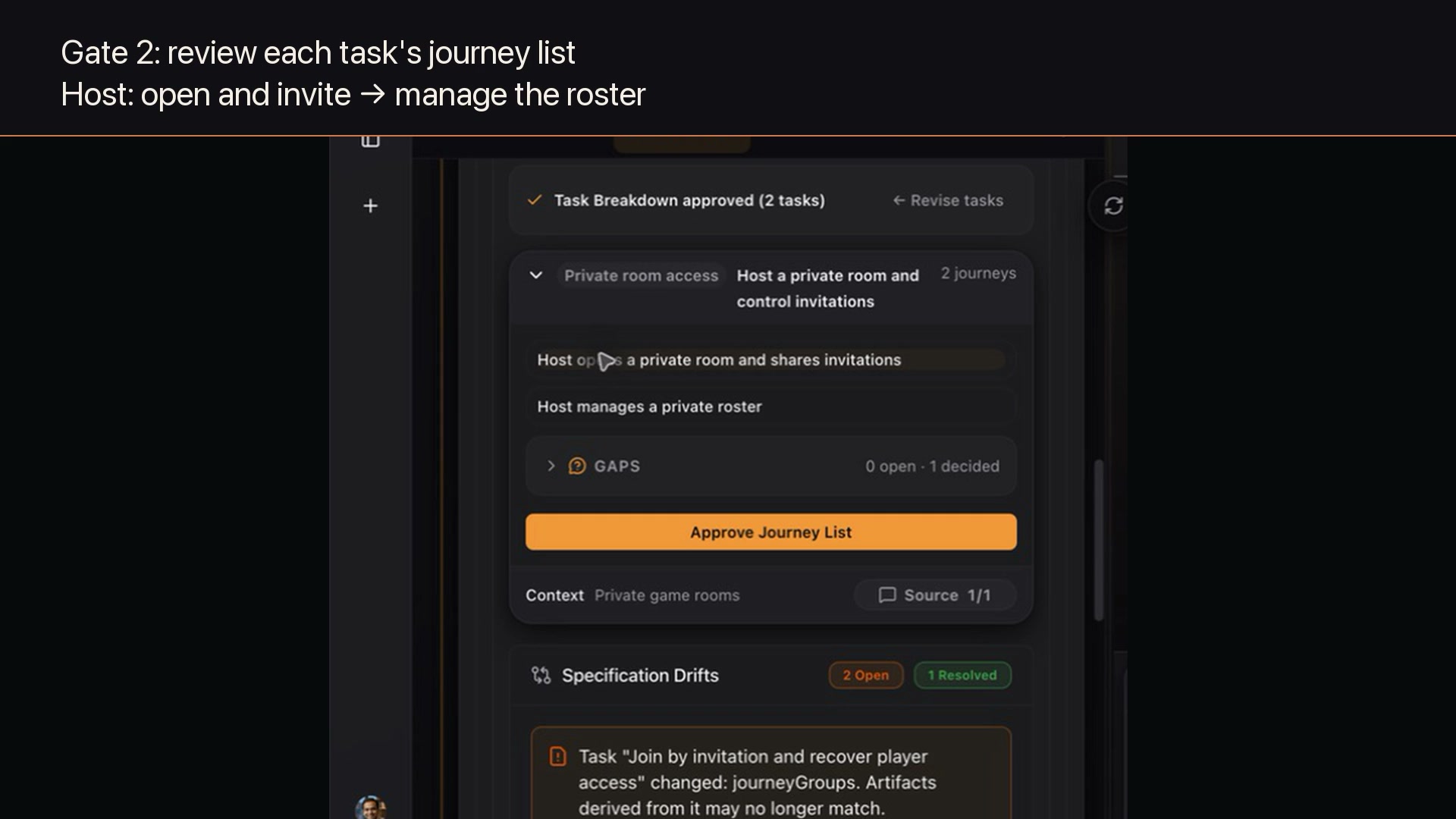
Kana begins with two tasks. The host opens a room and controls invitations. A friend joins and recovers their place. Each task expands into two user journeys, giving Nadia four clear paths to review without pretending the whole game belongs in one release.
Progressive review turns a plan into decisions
Kana moves through the same chain the plan used:
- review the task breakdown;
- review each task’s journey list;
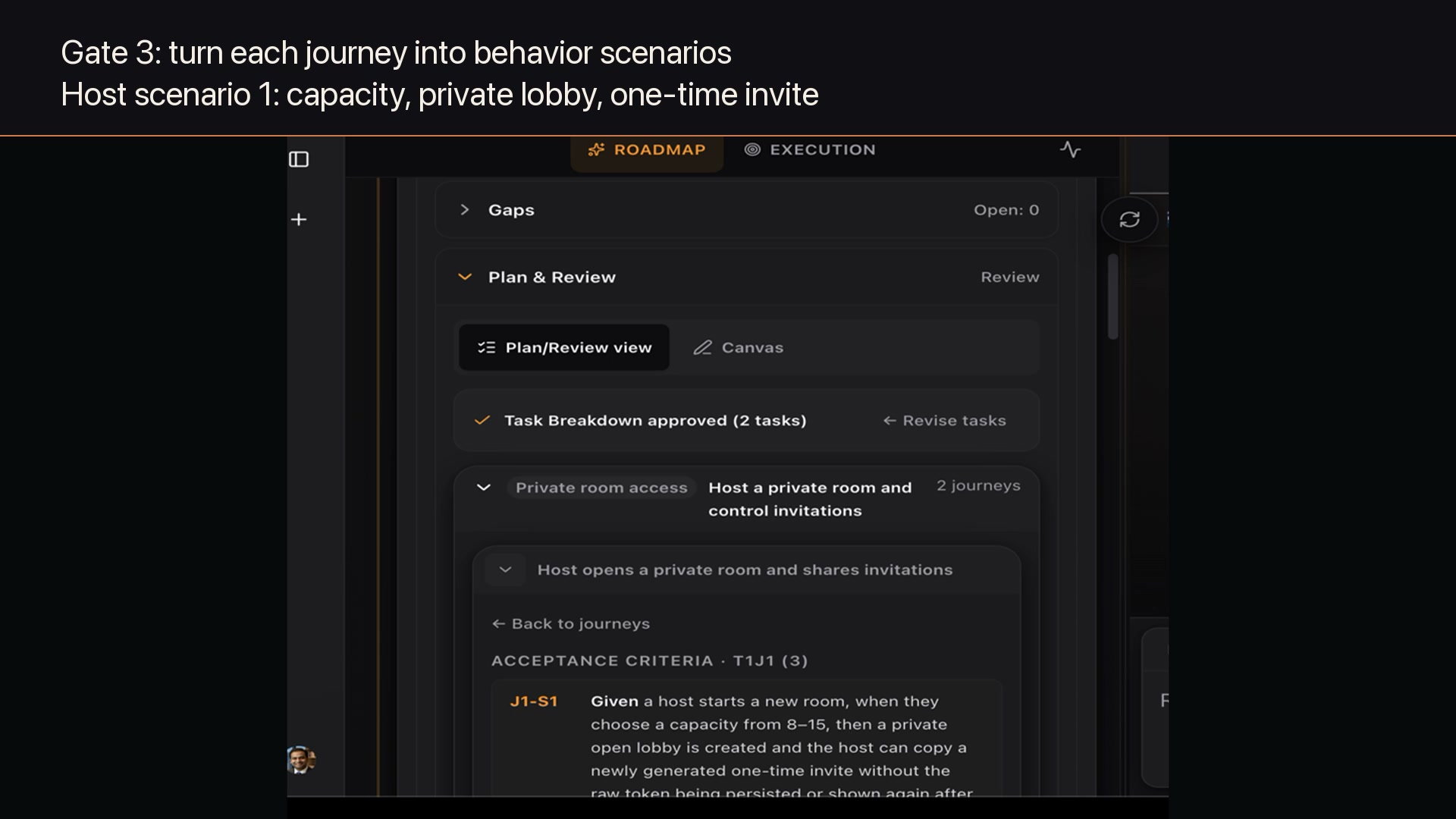
- review each journey as concrete behavior scenarios;
- inspect the blueprints that contribute evidence to those scenarios.
That progression matters. Nadia can judge the experience first, then zoom into rules and implementation evidence without losing the user problem that created them.
The behavior scenarios cover more than the happy path. They define one-time invitations, revocation, room-only host access, safe failures, throttled guessing, full rooms, and reconnecting to the same seat without spending another invite or creating a duplicate player.
One adversarial question changes the product
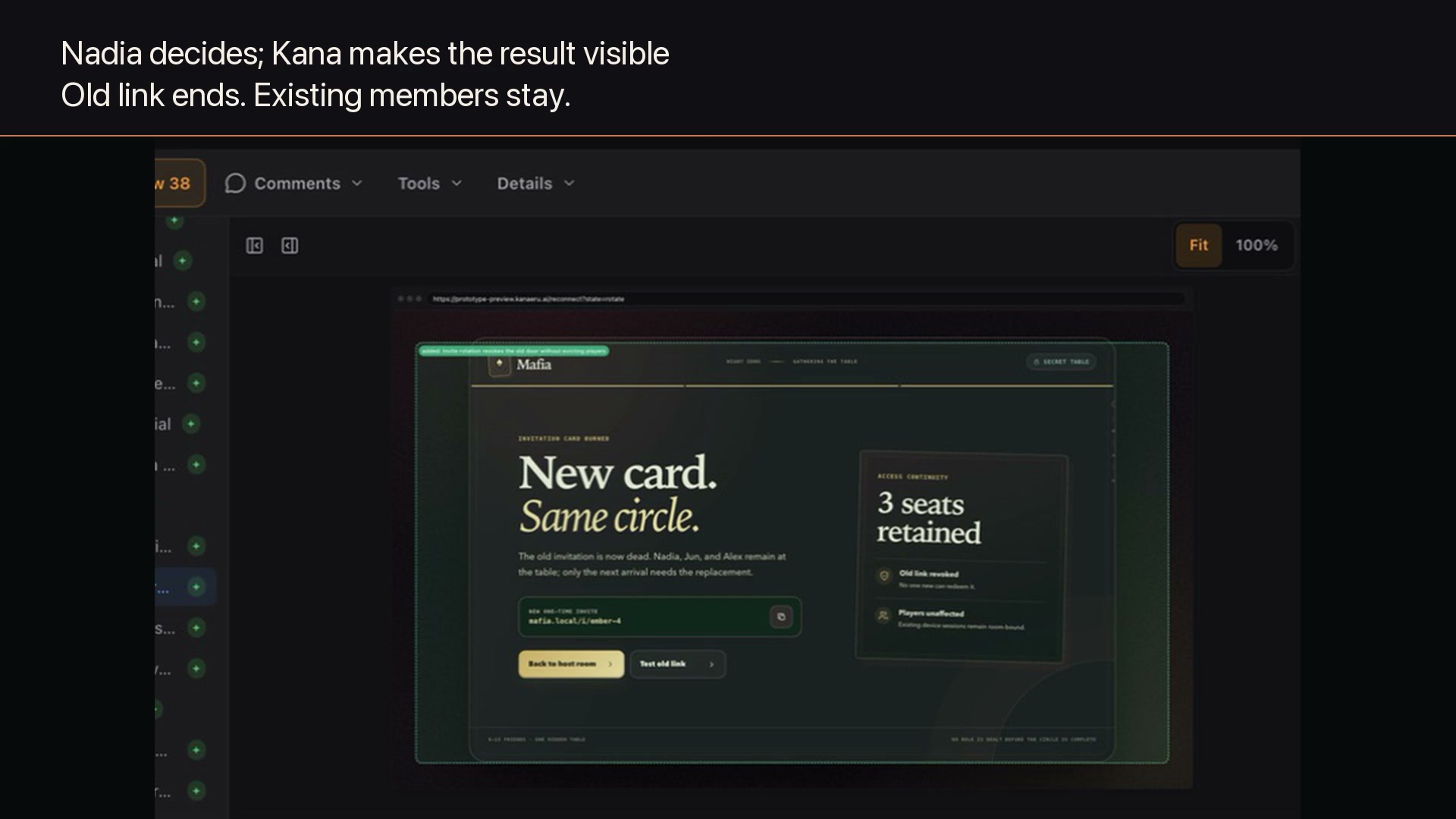
Kana plays devil’s advocate: what happens if Nadia sends a private invitation to the wrong group chat?
That exposes the decision hidden inside “revoke.” Should changing the invitation remove friends who already joined, or only stop future entries?
Nadia chooses a simple rule: the old link stops future joins, while admitted players keep their seats. Kana carries the decision into the behavior scenario and the working prototype. The replacement invitation, dead old link, and retained player circle become visible together.
Every blueprint must tell the same story
Kana traces the decision through the evidence that will guide implementation:
- the business model defines rooms, invitations, player identities, memberships, and recovery sessions;
- the connection contract makes creation, joining, revocation, roster access, retries, and safe failures predictable;
- the interaction flow exposes timing and race conditions;
- the quality plan turns invitation safety, privacy, reconnects, and minimal data into measurable checks;
- the intent keeps every detail tied to fast private entry and reliable return;
- the UX Mockup makes the experience testable before code hardens it.
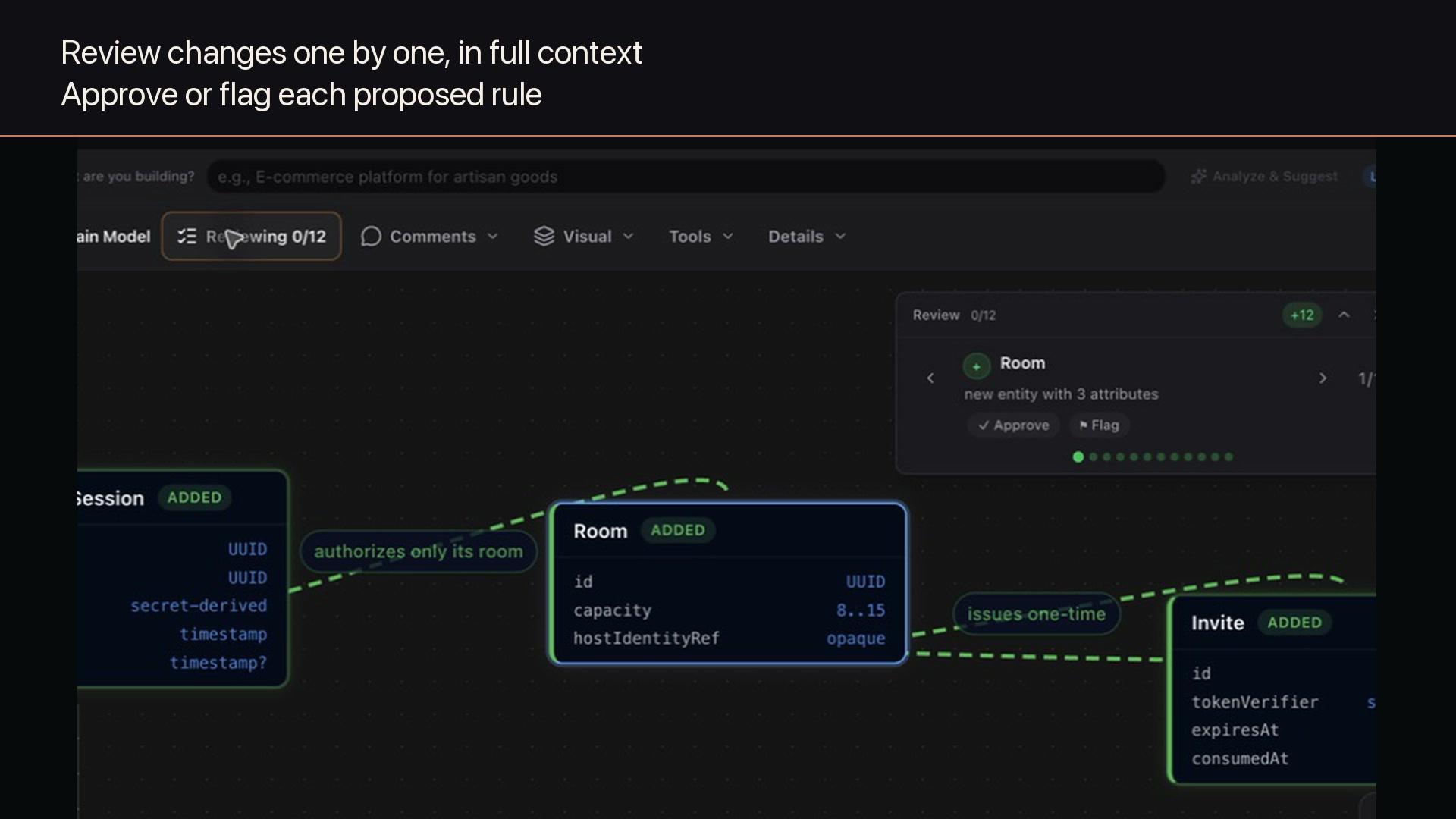
The Review session presents proposed blueprint changes one by one inside their full context. Nadia can approve or flag each change while still seeing where it belongs in the complete model.
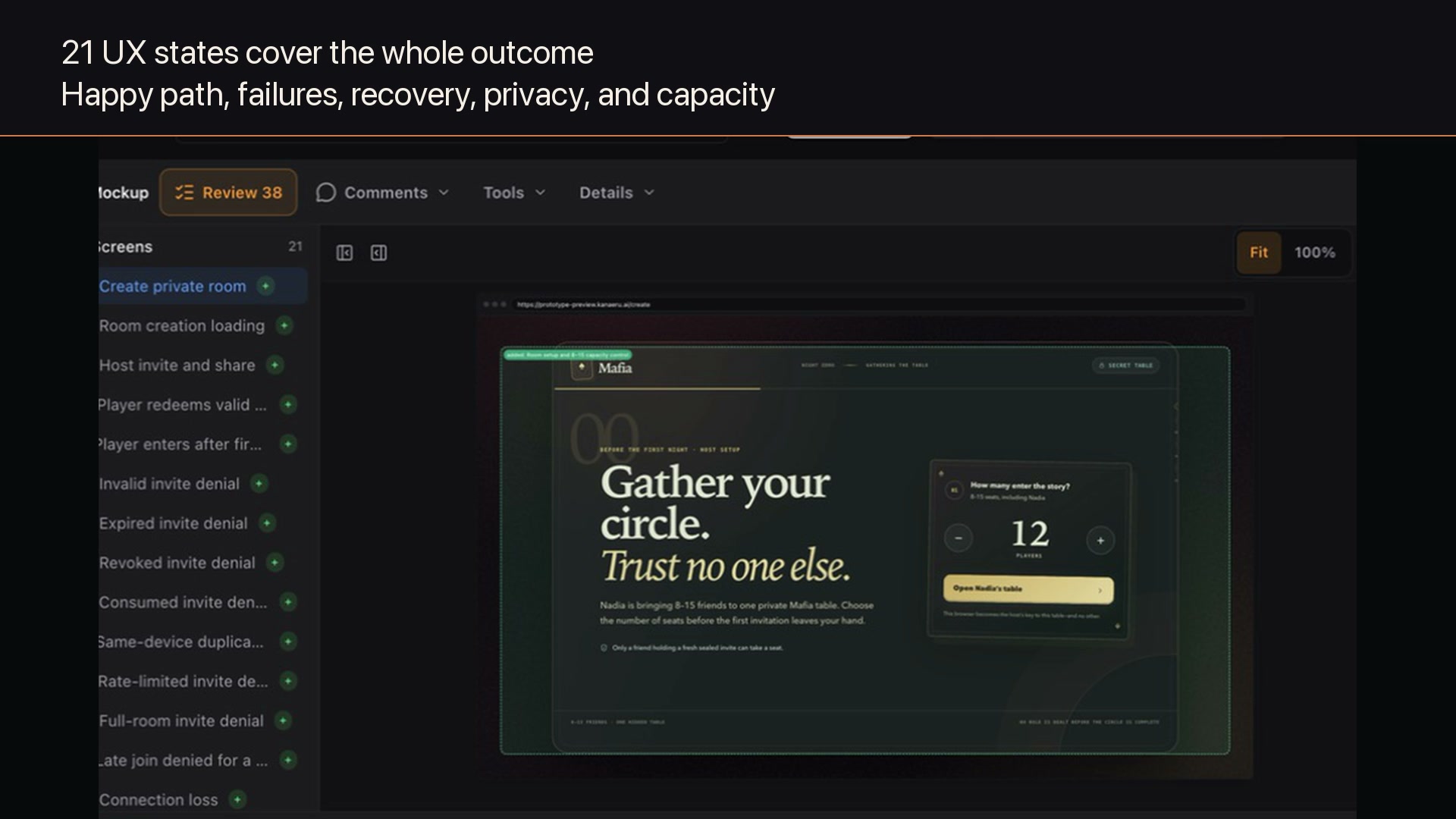
The UX Mockup covers 21 states, not one polished screen
The prototype establishes a real design system for the Mafia game: a dark tabletop, warm invitation card, serif display type, visible focus states, and phone-first actions. It does not look like a generic admin dashboard.
Kana reviews 21 states across creation, loading, valid entry, every unavailable-link case, rate limiting, full rooms, reconnects, roster privacy, and invitation replacement. The reconnect screen restores Alex to the same seat. The full-room screen keeps entry closed and gives the host an actionable next step. Both states hide roles, private actions, raw invitations, addresses, and failed-attempt details.
“Not ready” is a successful Review session result
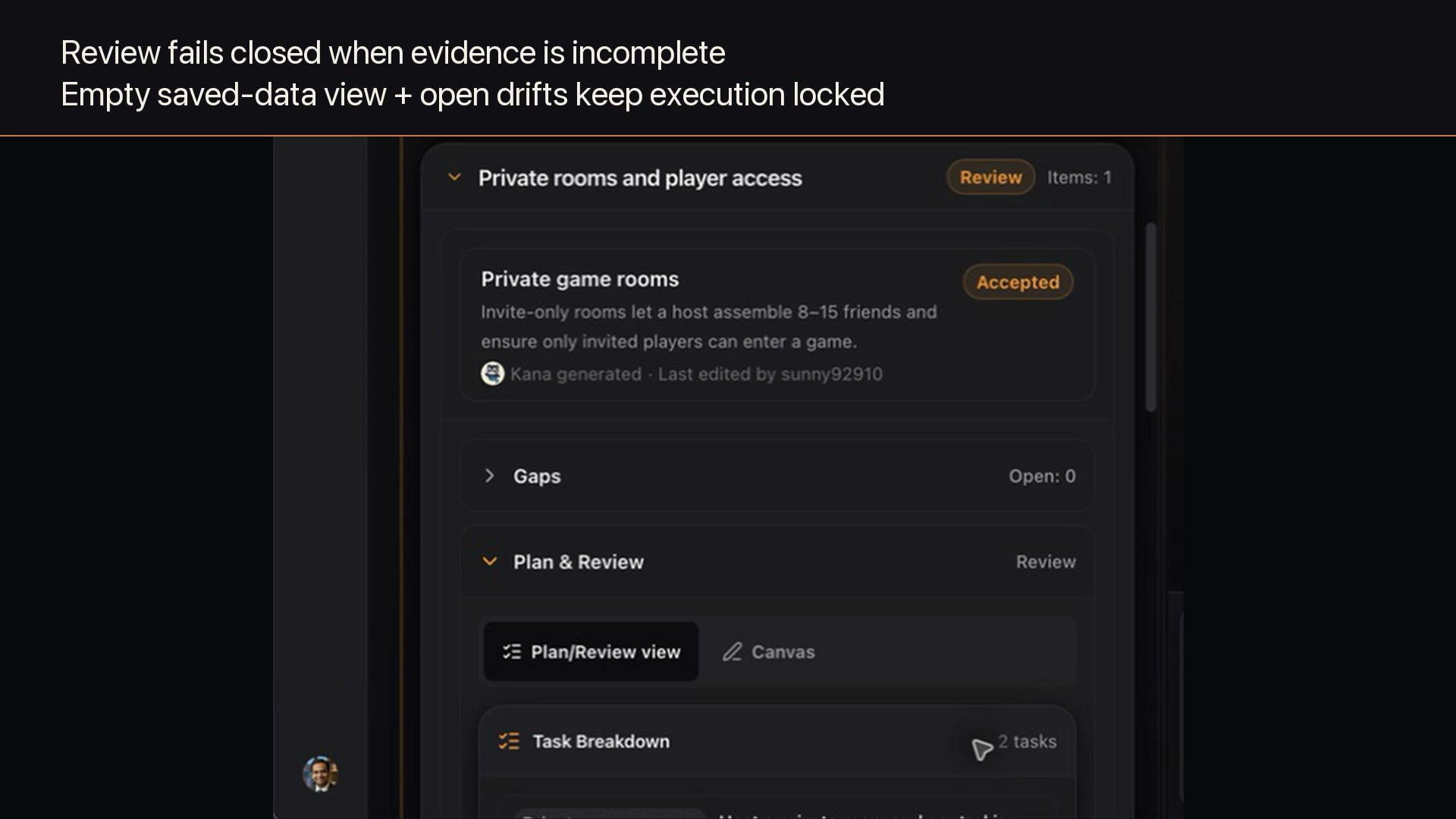
The live review remains locked. The saved-data blueprint currently renders empty, and two specification drifts remain open. Kana does not turn an incomplete screen into approval. Start Outcome stays disabled until the missing evidence is repaired and reviewed.
After the blueprints agree, Kana initializes the project and asks an independent reviewer to verify the runnable foundation. Then the accepted behavior scenarios become executable tests. A working-looking prototype alone cannot unlock execution.
The final gate is an understanding quiz with the reviewed plans hidden. Questions come from Nadia’s decisions: one-time invitation safety, roster privacy, reconnecting to the same seat, and full-room behavior. The real quiz requires 100%. Kana reteaches a missed decision in simpler words and asks again.
What the Review session gives Nadia
Kana has turned an accepted plan into a shared, testable agreement:
- tasks preserve the delivery boundary;
- journeys preserve the user experience;
- behavior scenarios preserve exact outcomes;
- adversarial questions uncover decisions the happy path missed;
- connected blueprints keep product, design, system, and quality evidence aligned;
- the working prototype tests the whole UX scope;
- setup review, behavior tests, and the quiz block premature execution.
When those gates pass, Nadia can choose Start Outcome with evidence instead of optimism. Episode 4 follows the same work into Task execution sessions.
Want Kana to pressure-test your plan before expensive mistakes reach code? Join the Software Factory waitlist.
